Cluster: Kitchen, Bath & Storage Planning | Content Type: Comparison | Search Intent: Commercial Investigation | Audience: Solution-Aware | Funnel: Middle of Funnel
Open shelving is best when you want fast access, visual openness, and a place to display frequently used items. Upper cabinets are usually better when you need higher storage capacity, dust protection, and a calmer visual field. In many real kitchens, a mixed plan is more practical than choosing one system for every wall.
TL;DR Choose open shelving for visible, frequently handled items and for walls where a lighter appearance matters. Choose upper cabinets for pantry goods, mismatched everyday items, infrequently used equipment, and households that prefer lower cleaning effort. A hybrid layout often keeps one display zone open while reserving enclosed cabinets for bulk storage.
The Real Comparison Is Access Versus Concealment
Open shelves and upper cabinets solve different problems. Shelves reduce the visual mass of wall storage and keep items immediately visible. Cabinets hide clutter and provide a defined enclosure. Neither option is automatically more functional; the better choice depends on what you own, how often you cook, how much dust and grease the kitchen receives, and how disciplined you want to be about display.
The National Kitchen & Bath Association regularly treats storage as a planning priority rather than an afterthought. Its professional coverage of accessible kitchen storage highlights the value of choosing storage around reach and use. That principle matters more than the current popularity of any one shelf or cabinet style.
| Decision factor | Open shelving | Upper cabinets |
|---|---|---|
| Visual effect | Lighter and more open; contents become part of the design | More continuous and visually quiet; doors conceal contents |
| Access | Fast for everyday dishes and frequently used ingredients | Fast when well organized, but doors add a step |
| Cleaning | Shelf surfaces and displayed items need regular dust and grease attention | Exterior doors need cleaning; interiors are more protected |
| Capacity | Limited by shelf depth, spacing, and what looks tidy | Usually better for mixed shapes, bulk supplies, and less photogenic items |
| Flexibility | Easy to restyle and change display | Interior organizers can increase function without changing the room’s look |
| Best fit | Minimal collections, display pieces, compact visual zones | Busy households, high storage demand, lower-visibility storage needs |
Where Open Shelving Works Especially Well
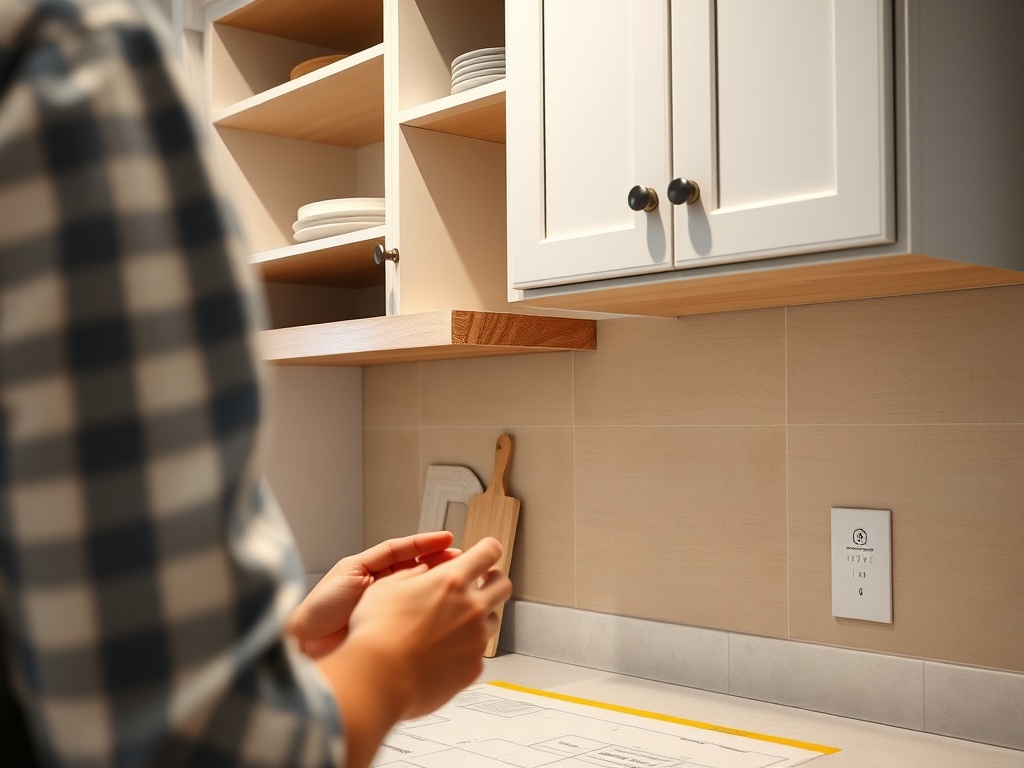
Open shelving is strongest when it stores items that are both used often and easy to keep orderly: everyday bowls, mugs, glassware, serving pieces, cookbooks away from splatter zones, or a small group of dry goods in closed containers. It can also be useful near a coffee station or breakfast area where quick reach matters more than maximum capacity.
A shelf can make a small kitchen feel less top-heavy because there is less door and cabinet-box mass at eye level. That is a visual preference, not a measurable performance advantage. The trade-off is exposure. Open shelves collect dust, and shelves near a cooktop can also collect airborne grease. Recent NKBA design commentary notes that open shelving generally requires more dusting, which is one reason enclosed storage remains attractive.
Open shelving is a weaker fit when
- You need to store many unrelated items in different packages and sizes.
- You dislike frequent dusting or wiping individual objects.
- The only available wall is immediately beside a high-splatter cooking zone.
- You rely on upper storage for lightweight appliances or bulk pantry goods.
- You want the kitchen to look calm even when daily routines are busy.
Where Upper Cabinets Earn Their Space
Upper cabinets make sense when storage density matters. Doors let you place practical items by use rather than by appearance, and adjustable shelves can accommodate tall or short containers. Cabinets also make it easier to separate food, dishes, medicine, cleaning supplies, and occasional-use items into controlled zones.
Well-planned cabinets are not automatically hard to access. Pull-down fittings, internal risers, adjustable shelving, and thoughtful shelf heights can reduce wasted volume. The design question is whether the cabinet interior is configured for your actual inventory. A deep cabinet packed front to back may hold more, but it can also hide items unless the layout includes organizers or a clear category system.
Cost Is More Complicated Than “Shelves Are Cheaper”
A basic shelf can require less material than a full cabinet box and door, but project cost depends on material, hardware, wall structure, finish quality, installation labor, and whether electrical or backsplash work must be altered. Thick custom wood shelves with concealed steel supports can cost more than expected. Stock upper cabinets may be comparatively economical in a standard layout.
Because price changes by region and specification, it is better to compare complete installed scopes than to rely on a universal per-foot number. Include shelf brackets or concealed supports, finishing, wall repair, cabinet hardware, trim, lighting changes, and any backsplash work in the same comparison.
Maintenance and Daily Performance
Think in terms of the cleaning you will actually do. Open shelves reward routine use: dishes that cycle through the dishwasher are less likely to sit long enough to gather heavy dust. Decorative items and rarely used glassware may need extra attention. Enclosed cabinets reduce exposure but still need periodic interior cleaning, especially around pantry goods.
For food-storage zones, cleanliness and pest awareness matter regardless of the storage style. University of Minnesota Extension recommends cleaning cabinets and shelves thoroughly when addressing pantry pests. The takeaway is practical: accessible corners, wipeable surfaces, and sensible food containers matter more than the door style itself.
A Mixed Plan Often Solves the Most Problems
A useful compromise is to keep one short run of open shelves for attractive everyday items and use cabinets elsewhere for bulk storage. This can preserve visual breathing room without sacrificing the ability to close a door on mismatched groceries and appliances. In especially dim kitchens, wall-storage choices also interact with color and light, so the guidance on paint colors for low-light rooms and smarter room-by-room lighting can help you judge the whole wall composition rather than storage alone.
Use This Quick Decision Framework
1. Inventory what must live above the counter, separating everyday items from occasional-use items.
2. Estimate how much of that inventory you would be comfortable seeing every day.
3. Mark cooking splatter zones and areas where shelves would be harder to keep clean.
4. Check reach heights for the shortest regular user and reserve difficult-to-reach areas for lightweight, occasional items.
5. Compare complete installed costs for the specific shelf and cabinet systems you are considering.
6. If you are split, choose a hybrid plan rather than forcing one storage type across the entire kitchen.
For homes where storage pressure extends beyond the kitchen, small bedroom storage planning applies the same principle: place high-frequency items where access is easiest and use concealed storage for visual calm.
Make the Choice Around Your Habits
Open shelving is not inherently more modern, and upper cabinets are not inherently more practical. The better solution is the one that matches your inventory, cleaning tolerance, reach, and preferred visual density. If you cook every day and own a large assortment of pantry goods, cabinets usually carry more of the functional load. If you keep a small set of attractive everyday items and value openness, selected shelves can be highly effective.
| Next step: photograph each kitchen wall, list what must be stored there, and compare one all-cabinet plan with one hybrid plan before deciding. |
|---|
| Informational note: Storage design and installation recommendations are general. Confirm wall structure, fastener requirements, electrical clearances, local codes, and manufacturer instructions before installing cabinets or load-bearing shelves. |