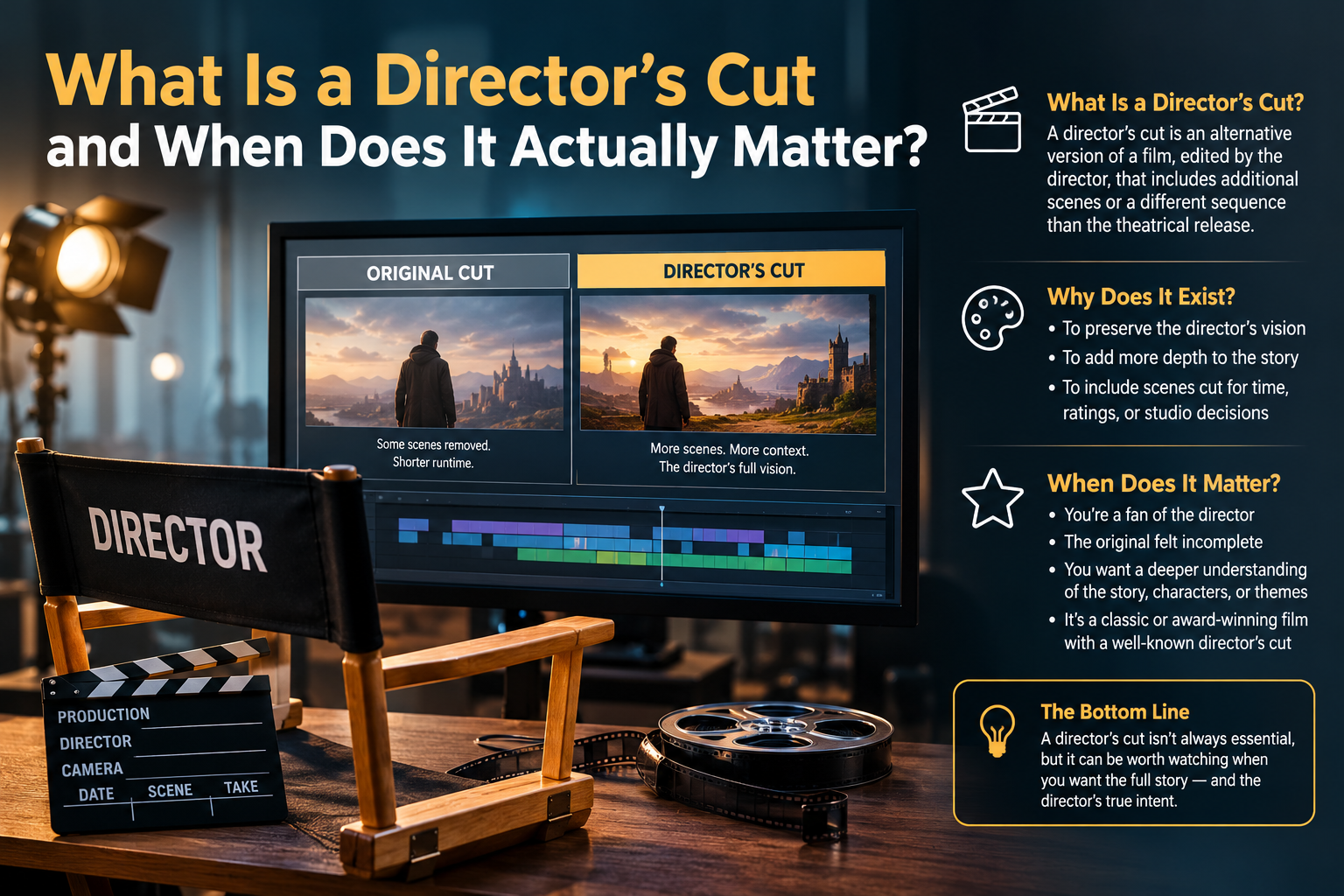
A director’s cut is a version of a film edited according to the director’s own creative vision, usually separate from the theatrical version approved for release. It matters when the differences change the way the story feels, how characters are understood, or what the filmmaker was trying to say.
TL;DR
- A director’s cut reflects the filmmaker’s preferred edit, not necessarily the studio-approved release.
- The changes may include restored scenes, altered pacing, a different ending, or removed studio-mandated material.
- It is not automatically better, but it is often more revealing of the director’s intent.
What the Term Actually Means
In studio filmmaking, the finished movie is shaped by many voices. A director may guide the shoot, but producers, distributors, financiers, test audiences, ratings boards, and marketing teams can all influence the final version. The theatrical cut is the version the audience first sees in cinemas or on a major release platform. A director’s cut is a later version that gives the filmmaker more control over structure, tone, and emphasis.
The phrase is sometimes used loosely, so viewers should not assume every alternate version is a true director’s cut. Some releases are extended editions created mainly for collectors. Others add deleted scenes without changing the core rhythm of the film. A meaningful director’s cut usually appears when there was documented disagreement about the original edit or when the filmmaker later had a chance to restore material that was removed for commercial reasons.
How a Director’s Cut Can Change the Viewing Experience
A director’s cut can change a film in subtle or dramatic ways. Sometimes it restores a few quiet scenes that explain a character’s motivation. Sometimes it restructures the entire narrative so that the story unfolds differently. A restored opening, a slower middle section, or a less tidy ending can make the same film feel more patient, darker, more political, or more emotionally complete.
The most common changes involve runtime, tone, and context. A studio may shorten a film to allow more daily screenings or to reduce audience fatigue. A director may prefer a longer version because the extra scenes provide atmosphere and psychological detail. Neither approach is automatically wrong. A theatrical cut can be tighter and more accessible, while a director’s cut can be richer and more personal.
When It Actually Matters
A director’s cut matters most when the original release was shaped by compromise. If the studio forced a voice-over, added a happy ending, removed controversial material, or cut scenes that explain the story, the alternate version can substantially alter the work. In those cases, the director’s cut is not just bonus content; it is a competing interpretation of the film.
It matters less when the differences are cosmetic. A version that adds two minutes of background dialogue may be interesting for completists, but it probably will not change a casual viewer’s opinion. A useful test is to ask whether critics and the filmmaker describe the alternate version as structurally different. If the conversation is only about extra footage, the stakes are lower.
Common Changes to Look For
When comparing two versions, focus on what the changes do rather than simply how many minutes were added. A longer runtime does not guarantee a better film. The most important question is whether the new material changes meaning, not whether it increases quantity. Look for these signs:
- A different opening or ending that changes the viewer’s first or final impression.
- Restored scenes that explain character choices or relationships.
- Removed narration, studio-added jokes, or scenes created to make the film easier to market.
- A shift in rating, violence, sexuality, or political content that changes the tone.
- A slower or more deliberate pace that gives the director’s themes more space.
How to Decide Which Version to Watch
For a first viewing, the theatrical cut is usually the best starting point because it shows the version audiences and critics originally responded to. Watching the director’s cut later allows you to compare intent with release strategy. If the film has a famous production history, however, the director’s cut may be the version most aligned with the filmmaker’s reputation.
For home viewing, context helps. Read a short production note, check whether the director has publicly endorsed a version, and look at the runtime difference. Avoid treating the label as a quality guarantee. A director’s cut is a creative document, not a certification that the movie has been fixed.
Why the Term Matters in a Streaming Age
Streaming platforms have made alternate versions easier to access but sometimes harder to identify. A platform may list a director’s cut, an unrated cut, and an extended edition side by side without explaining the difference. Viewers who care about film history should pay attention to those labels because they reveal who had control over the work and how that control shifted after release.
The discussion also connects to larger entertainment questions: who owns a work, who can change it, and which version becomes culturally remembered. A director’s cut is ultimately a reminder that a film is not only a story on screen; it is also the result of negotiations among art, commerce, rights, audience expectations, and distribution strategy.
Getting Started With Your Next Watch
If both versions are available, watch the theatrical cut first unless the director’s cut is widely considered the definitive version. Then revisit the film with the alternate edit and note what changed in your emotional response. Pay attention to pacing, character clarity, and ending tone. Those differences will tell you whether the director’s cut genuinely matters or simply adds more material for fans.
Additional Practical Notes
A useful way to evaluate an alternate cut is to separate curiosity from necessity. Curiosity asks what else exists in the archive; necessity asks whether the theatrical version prevents the film from working as intended. Some deleted scenes are fascinating because they reveal process, but they do not always belong in the final rhythm.
The best director’s cut conversations also recognize collaboration. Film is not a private diary; editors, producers, actors, composers, and cinematographers shape the final experience. A director’s cut represents one privileged creative perspective, but it is still built from collective labor and practical constraint.
For viewers, the label becomes most useful when paired with production history. If the director, editor, or producer has explained why changes were made, the alternate cut becomes easier to assess. Without that context, it may be just another version rather than a meaningful correction.