
Cluster: Vegetable & Herb Gardening | Content Type: How-To | Search Intent: Informational | Audience: Intermediate | Funnel: Top of Funnel
A productive kitchen garden layout starts with sun, access, soil, water, and realistic crop quantities. Put the most frequently harvested herbs and vegetables where they are easiest to reach, keep paths wide enough for routine care, group crops by water and management needs, and use the spacing on seed packets or trusted extension guidance rather than crowding plants for a fuller look.
Map sun and water first, then choose beds and paths you can reach without stepping on growing soil. Place tall crops where they will not unnecessarily shade shorter ones, reserve the easiest spots for frequent harvests, and plan successive sowings only if you have time to maintain them. Productivity comes from usable access and healthy spacing, not from filling every square inch.
Choose the Site Before Drawing the Beds
A kitchen garden needs enough light for the crops you intend to grow, practical access to water, and soil or raised-bed media that drains appropriately. Observe the site through the day rather than judging it once at noon. Buildings, fences, and trees can create moving shade that changes across the season.
Oregon State University Extension’s comprehensive Growing Your Own guide emphasizes planting vegetables at the right time, depth, and spacing. Those basics should shape the layout before decorative choices. If plants are crowded, they compete for light, water, and nutrients and become harder to inspect and harvest.
Pick a Bed Style You Can Reach Easily
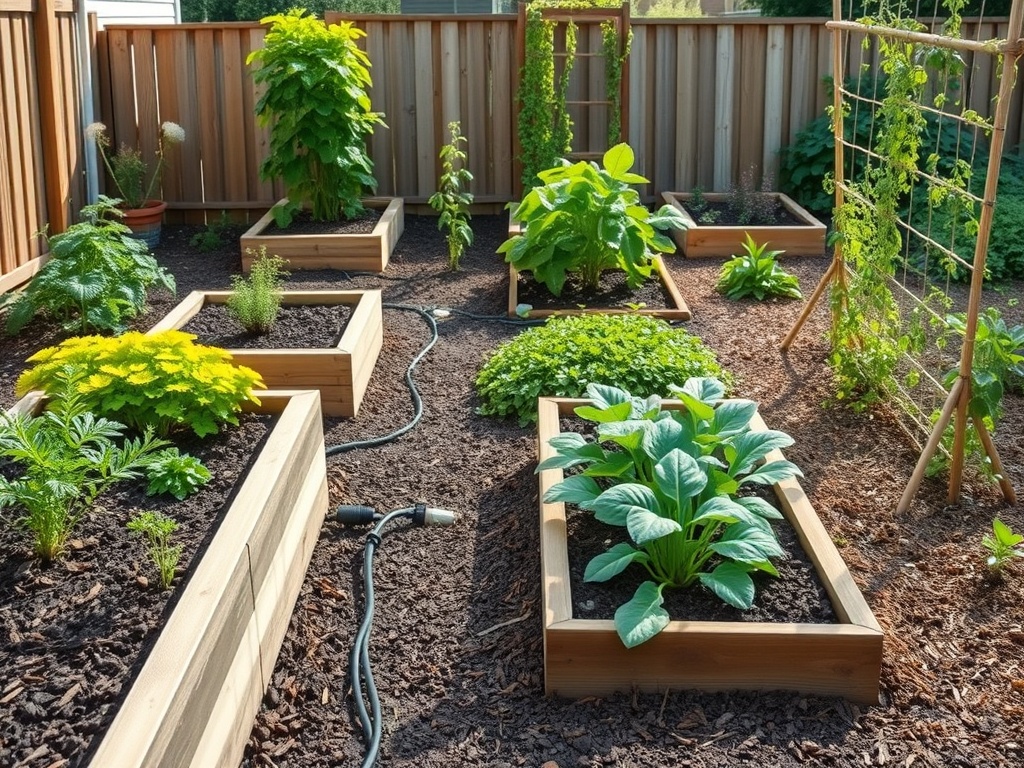
Raised beds, in-ground beds, and containers can all support a productive kitchen garden. The best choice depends on site soil, mobility, drainage, budget, and permanence. Keep bed width narrow enough that you can reach the center from paths without stepping into the growing area. Repeated foot traffic compacts soil and makes planting and maintenance harder.
Containers work well for herbs and compact crops near a door or patio. Raised beds can simplify soil management where native soil is difficult, but they still require good media, irrigation, and maintenance. In-ground beds may be the simplest approach where soil conditions are suitable and long-term layout flexibility matters.
Put Paths Into the Plan From the Beginning
Paths are productive infrastructure because they make planting, weeding, watering, and harvesting easier. Size the main route for the tools you use. A narrow stepping path may be enough for hand work, while a wheelbarrow or garden cart needs more room. Avoid dead-end layouts that force you to step over beds while carrying harvest baskets or hoses.
Arrange Crops by Height, Harvest Frequency, and Season
Keep frequent harvests close
Herbs, salad greens, cherry tomatoes, and other crops picked often deserve the most convenient positions. If the kitchen garden is near the house, put those plants closest to the access point. Crops harvested once at the end of the season can occupy less convenient areas.
Manage shade from tall crops
Trellised beans, indeterminate tomatoes, corn, and other tall crops can shade neighboring plants. Their best location depends on your site orientation and the seasonal sun path. Use a simple sun sketch to predict where shadows will fall instead of following a one-direction rule without checking the property.
Leave room for crop expansion
Squash, cucumbers, and sprawling herbs can occupy much more area than their transplant size suggests. Use mature spread and spacing guidance when drawing the bed. Trellising can redirect growth vertically for some crops, but support structures must be stable and should not create excessive shade where it is unwanted.
Use Plant Spacing as a Design Input
Seed packets and extension guides provide spacing that reflects each crop’s growth habit. Do not shrink spacing simply to fit one more plant. OSU Extension notes that correct spacing gives each plant access to sunlight, water, and nutrients. If the planned crop list does not fit, reduce quantities or add another growing area rather than assuming every plant can be crowded.
Plan Watering by Zone
Group plants with similar moisture needs where practical and route irrigation before planting. Drip or soaker systems can deliver water close to the soil and reduce wetting of paths. Hand watering may be entirely suitable for a small garden if the hose reaches comfortably and the routine is sustainable.
Place thirsty containers or shallow-rooted greens where they can be checked easily. During extreme heat, irrigation needs can change quickly; heat-wave plant protection guidance explains how to combine soil-moisture checks, mulch, and temporary shade rather than relying on a fixed calendar.
Build Succession Planting Into Empty Spaces
Succession planting means replacing a finished crop with another crop or sowing smaller batches at intervals. It can extend harvests, but it also increases planning and maintenance. Mark expected harvest windows on a simple calendar and identify which bed section becomes available next. Avoid planting a second crop if its seasonal timing does not suit your local conditions.
For perennial herbs, berries, or other overwintering plants, local climate matters. The USDA’s 2023 Plant Hardiness Zone Map can help with perennial cold-hardiness screening, but it does not replace information about summer heat, rainfall, soil, or site microclimates.
Keep Soil and Compost Access Practical
A garden layout should include somewhere to stage compost, mulch, stakes, and harvest containers without blocking paths. If you compost at home, place the system where it is convenient enough to use but not where runoff or pests become a problem. Keep bulk amendments close enough that maintenance does not require carrying material through planted beds.
Avoid Layout Mistakes That Reduce Productivity
- Planning beds before observing the site’s sun pattern.
- Making beds so wide that the center can only be reached by stepping on soil.
- Planting tall crops where they shade most of the garden unintentionally.
- Crowding transplants because the garden looks empty early in the season.
- Running hoses across main paths where they become trip hazards.
- Planting more of one crop than the household can realistically harvest and use.
- Ignoring where tools, compost, stakes, and harvest containers will be stored.
If the kitchen garden includes indoor seed-starting or herbs, the houseplant soil mix guide can clarify why container media behaves differently from native garden soil. For gardens integrated into a larger yard, choosing a landscape style can help connect the productive beds to paths, seating, and surrounding plantings.
Sketch a Layout You Can Maintain on a Busy Week
A productive layout is not the one with the highest theoretical plant count. It is the one you can water, weed, inspect, harvest, and replant without turning every task into an obstacle course. Draw the site to scale, mark sun and water, add beds and paths, then place crops by mature size and frequency of use. Leave a little open capacity for seasonal changes and mistakes.
| Next step: sketch the garden footprint, mark sun and water access, draw reachable beds and paths, and only then assign crops using mature spacing guidance. |
|---|
| Informational note: Planting dates, spacing, irrigation, pesticide use, and crop suitability vary by climate and jurisdiction. Use local cooperative extension guidance and product labels for region-specific recommendations. |


